
Mold Remediation
Mold remediation is the process of containing, removing and cleaning mold growth, then fixing the moisture problem that caused it.
See mold remediationSchedule a clearance check after cleaning in Aliso Viejo. Independent assessment can examine moisture and required samples before repairs.
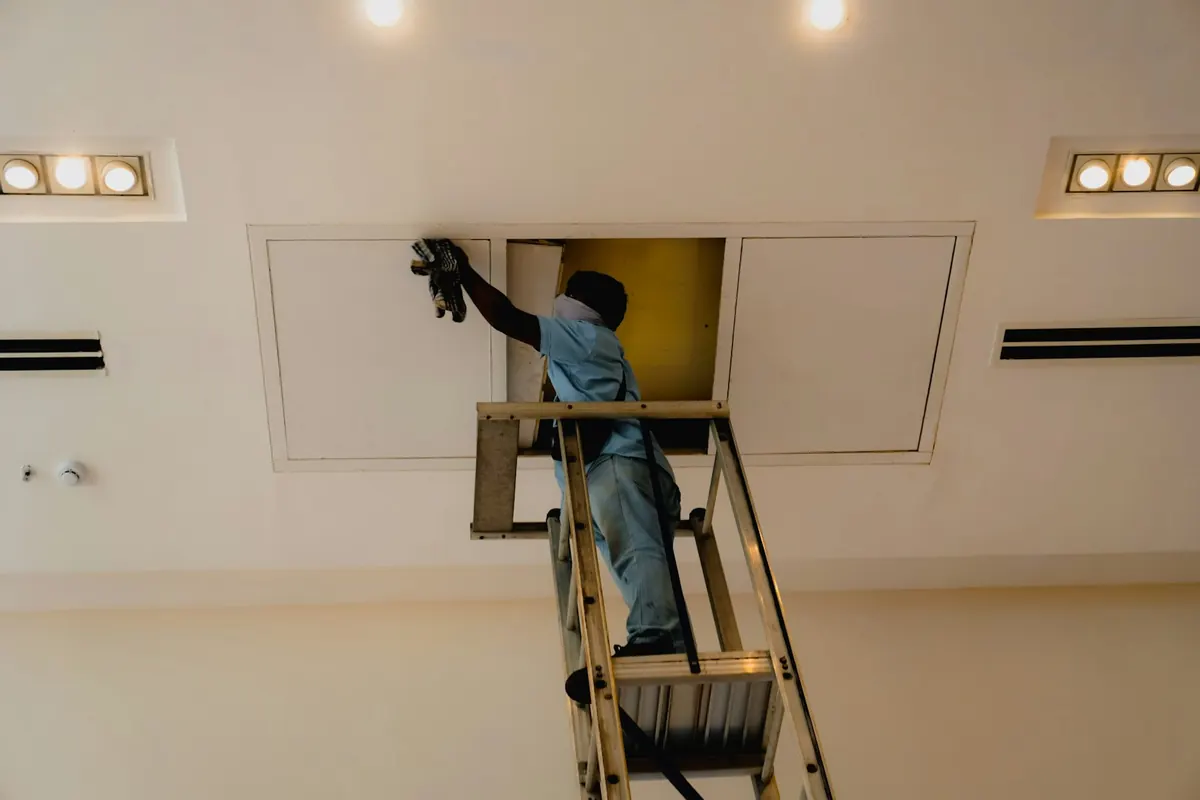
Its purpose is to confirm a clean area that is ready to rebuild.
The protocol sets removal boundaries and criteria for passing. The check that follows is known as PRV, post-remediation verification or a mold clearance test.
During the final inspection, the assessor examines what is visible and takes moisture readings. Sampling the air or surfaces may be included. A lab result cannot substitute for checking damp material, growth and debris.

Look for protocol terms covering visual conditions, acceptable moisture, sampling and the required response to a failure.
Know who corrects unmet criteria before another clearance inspection.
Ask who collects samples and which independent testing lab analyzes them.
Find out how the assessor weighs an outdoor air sample, lab results, visual findings and spore-trap data.
Get the area independently assessed if either a property agreement or the protocol calls for that check.
Have exposed cavities checked prior to installing new finishes over them.
Confirm that the leak was corrected and affected materials are dry.
Collect required samples before removing the containment barrier or negative air pressure.
Record sample sites, moisture mapping and separate findings.
Before the check, correct moisture, finish removal and clean. Then protect the work area.
Call (844) 352-3560For residential post-remediation clearance, Inspect and Test publishes $300 to $700 as its range. Its Colorado Front Range figure for a single room is $300 to $600 for the work. Samples, room count and area affect cost.
The figures are published national cost guide ranges, not results of a property visit. Following an on-site assessment, the property price should be explained to you before any work begins.
Ask about cost: (844) 352-3560Payment may be available from homeowners insurance for a covered loss. Coverage depends on your policy terms and the source of the water.
Keep water-loss photos, the remediation scope, drying records, invoices and the clearance report. California's Toxic Mold Protection Act includes a landlord written-disclosure section (Health and Safety Code 26147). By its own wording it applies only after the state adopts mold exposure standards, and the state health department has said it could not set them.
Depending on the lease, policy and moisture source, the tenant, insurer, landlord or owner may pay. Under California's housing law, visible mold found by a health officer or code enforcement officer can make a rental substandard. Renters can contact their local health or code enforcement department to ask for an inspection.
Find out whether approval is required for testing or the policy has a mold sublimit.
Choose an assessor separate from the removal work.
Follow the cleanup plan through an independent decision before rebuilding.
Use clearance criteria to document the moisture source and affected area.
Use poly sheeting and an air filtration device to limit dust movement.
Discard moldy drywall, ceiling tile or insulation that cannot be cleaned.
Use a HEPA vacuum and damp wiping. Cleaning is still needed after treatment.
Fix the water source, then use moisture readings to check that the area dried.
Any unmet requirement must be corrected and the outcome documented before you rebuild.

Phone at any hour. A mold clearance testing specialist takes your call, discusses what you see and outlines what comes next.
Complete clearance must address visible conditions, moisture and the purpose behind sampling.
Where relevant, check lower levels as well as an attic, basement or crawl space. A moisture meter can locate dampness. You cannot identify mold through thermal imaging.
Spore counts need context from moisture readings, the outdoor baseline and conditions you can see.
Poly sheeting and a HEPA air scrubber help limit particles during removal.
Can you clean it yourself? According to EPA, homeowners can often clean an area smaller than about 10 square feet. Professional help is appropriate when the area is larger or involves HVAC, major water damage, sewage or contaminated water.
Total timing consists of the visit, laboratory analysis and the report. Ask about it before repairs or containment removal.
Pause when you notice a musty odor. Check whether the moisture source is still unresolved and look for mold colonies or damp materials.
EPA guidance calls for relative humidity below 60 percent, with 30 to 50 percent as the ideal range. Using a dehumidifier will not fix a leak.

California has no state license or certification for mold assessors or remediators, according to the California Department of Public Health. General construction work above a small dollar amount does need a license from the Contractors State License Board (CSLB), so it is worth checking a contractor's license there and asking about their mold training. Check whether remediation must be separate from assessment under local rules.
Correct the source of water before cleanup. Dry water-damaged areas and items within 24 to 48 hours to prevent mold growth.
Indoor mold levels have no federal limit. Spore counts should be interpreted using moisture findings, the baseline sample and visible conditions.
The California Department of Public Health (CDPH) Air Quality Section publishes mold and dampness guidance and a mold FAQ. CDPH says visible mold, dampness, and mold odor are unhealthy and should be fixed, and that routine mold testing is not needed when mold is visible. Find out what requirements cover the assessor, the property and reporting.
The full mold clearance testing guide covers what is cleaned or removed, odor and air quality work, and the rules that apply in California and Orange County.
Read the full mold clearance testing guide
Local humidity and housing, along with access to your property, can influence mold cleanup planning, moisture control and containment.
Renters occupy 43 percent of homes in Aliso Viejo, so both tenants and owners may need a clear written record of leaks, damp materials, and visible mold before removal begins.
At a median build year of 1995, a hidden plumbing leak still matters, but tight construction can also make lingering humidity harder to release.
With a 61 percent single-family share, local buildings vary, and the moisture path may run through an attic, foundation, neighboring unit, or common pipe.
At 28 percent living alone among seniors, a musty smell or new wall stain should prompt a search for the water source before surface cleaning.
You can ask about mold cleanup in nearby communities and ZIP codes during the call.
Mold remediation is the process of containing, removing and cleaning mold growth, then fixing the moisture problem that caused it.
See mold remediation
A mold inspection is a visual check with moisture readings to find where mold is growing and what is feeding it.
See mold inspection
Mold testing takes air or surface samples that a lab reads to show which mold types are present and how much.
See mold testing
A mold inspection is combined with removal so workers can locate the growth before cleaning it away.
See mold inspection and removal
Removing surface and material growth, bagging items beyond saving and preparing the area for repairs are all part of mold cleanup.
See mold cleanup
During mold abatement, the affected space is closed off and contaminated materials are removed as part of the mold removal work.
See mold abatement
When you cannot see growth within walls, under flooring or beyond a ceiling, hidden mold remediation finds and removes it.
See hidden mold remediation (behind walls)
Mold damage restoration removes the mold and then repairs or replaces the drywall, insulation, flooring and other materials it damaged.
See mold damage restorationFor residential post-remediation clearance, Inspect and Test publishes $300 to $700 as its range. Its Colorado Front Range estimate is $300 to $600 for one room. Your total can vary with room and sample counts, an outdoor control sample, lab fees and any return visit.
The report needs to explain whether moisture, debris, growth or an out-of-range protocol sample caused the failure. Keep containment in place, complete the directed correction and arrange another check before rebuilding or replacing removed interior finishes.
A spore trap captures particles from the air for laboratory analysis. An outdoor air sample may be compared with indoor findings, though spore counts can change. Your results need context from visible conditions, moisture readings, collection details and the written protocol.
The site visit covers the visual inspection, moisture readings and required sampling. Final timing also reflects how long testing lab work and report writing require. Get the anticipated schedule before you plan reconstruction, other repairs, occupant access or containment removal.
An assessor who is independent of the removal company should determine whether the area passes. Ask about state requirements, the sampling plan, the testing lab and written criteria. California has no state license or certification for mold assessors or remediators, according to the California Department of Public Health. General construction work above a small dollar amount does need a license from the Contractors State License Board (CSLB), so it is worth checking a contractor's license there and asking about their mold training. With separate roles, the business that cleaned the area does not judge its own work.
A work area that is still damp is not prepared for repair. Wet material may show that drying is incomplete or a leak remains, and unresolved water can lead to returning mold. Compare moisture readings to suitable dry material and criteria stated in the written protocol.
For calm and useful guidance about mold clearance testing, you can reach someone by phone 24 hours a day.